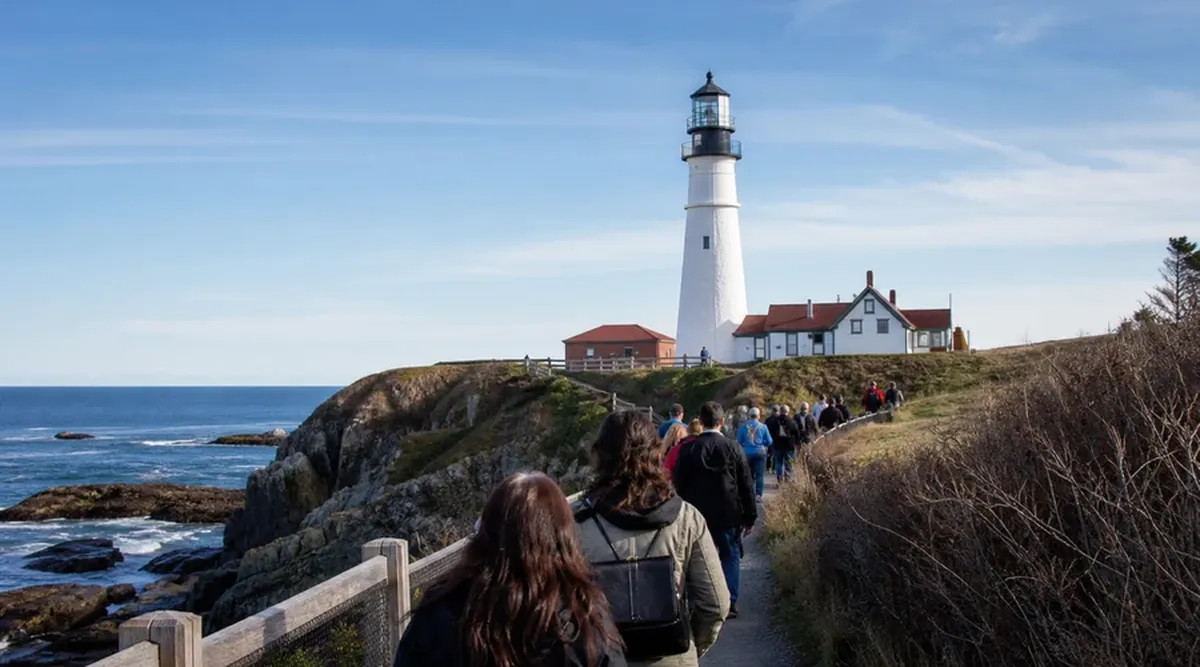
Lighthouse Tours
United States Lighthouse Heritage and Educational Tours
Lighthouses along the United States coastline served for more than two centuries as aids to navigation, marking hazardous shoals, harbor entrances, and reef systems before electronic GPS became widely available to mariners. Today many historic lighthouse structures remain operational under U.S. Coast Guard management, while others transfer to nonprofit stewardship organizations, state parks, or federal preservation programs. Educational lighthouse tours interpret optics, keeper lifestyles, architectural styles, and the transition from oil lamps and Fresnel lenses to automated LED beacons that reduced staffing requirements but also diminished human presence on remote towers.
Lighthouse visitation opportunities vary from self-guided grounds walks at unmanned stations to docent-led tower climbs requiring advance reservations and physical fitness. Tower stairs often exceed one hundred steps with narrow spirals, low headroom, and exposure to wind at gallery levels. Children, individuals with vertigo, and visitors with mobility limitations should review climb policies published by each managing organization rather than assuming uniform accessibility standards across sites.
This guide presents general educational information about United States lighthouse tours. It does not constitute personalized travel advice, safety guarantees, or endorsements of specific tour operators. Closures due to weather, restoration scaffolding, staffing shortages, or Coast Guard security requirements occur without long notice. Always verify current tour schedules, fees, and access rules through official lighthouse preservation society websites, state park reservation systems, and Coast Guard auxiliary local notices before traveling.
Atlantic and Gulf Lighthouse Regions
Atlantic coast lighthouses include Cape Hatteras Lighthouse in North Carolina—the tallest brick lighthouse in the United States—Montauk Point Lighthouse at New York's eastern tip, and Boston Light on Little Brewster Island with documented service dating to 1716. Many Atlantic towers stand on shifting barrier islands or eroding bluffs, prompting historic relocation projects such as the 1999 Hatteras move inland to escape shoreline retreat. Educational tours at these sites often address coastal erosion science alongside navigation history.
Gulf Coast lighthouses including Sand Key Light off Key West, Florida, and Biloxi Lighthouse in Mississippi survived or were rebuilt after repeated hurricane strikes. Gulf tower tours may integrate hurricane preparedness education and discussions of steel-pile versus masonry construction responses to storm surge. Some Gulf lights remain active aids to navigation visible only by boat tour because offshore placement prevents casual roadside visitation.
- Reserve tower climb tickets early for popular summer weekends at Cape Hatteras, Portland Head Light area programs, and similar high-demand sites.
- Wear closed-toe shoes with secure tread; flip-flops are commonly prohibited on tower stairs.
- Bring layers; gallery platforms expose visitors to winds stronger than ground-level conditions suggest.
- Check height minimums and maximums for children; some climbs restrict younger visitors without exception.
Great Lakes and Inland Sea Lights
Great Lakes lighthouses number in the hundreds across Michigan, Wisconsin, Minnesota, Ohio, Pennsylvania, and New York shorelines. Freshwater gales produce waves and erosion comparable to ocean storms over fetch distances exceeding three hundred miles on Lake Superior. Split Rock Lighthouse in Minnesota and Big Sable Point Lighthouse in Michigan exemplify remote towers once supplied by keeper boats and now reached by interpretive trails or shuttle programs. Seasonal ice formations alter access paths from December through March in northern lake states.
Great Lakes tour seasons typically run from late spring through early fall when stairs are dry and staffing available. Some lights operate as bed-and-breakfast keeper programs under license agreements that fund restoration; educational visitors should distinguish between historic interpretation-focused stays and general hospitality marketing. Lighthouse festivals on the Great Lakes, including annual events in Michigan and Ohio, coordinate open-house days when multiple towers admit climbers on coordinated schedules published regionally.
- Review black fly and mosquito season timing for remote lake shore trail approaches to tower sites.
- Confirm whether ferry connections are required for offshore lake lights before booking mainland lodging.
- Consult state historical society pages for restoration years when interior lantern room access may be restricted.
Pacific Coast and Hawaiian Navigation Structures
Pacific lighthouses from Point Reyes Light Station in California to Heceta Head Light in Oregon and Cape Disappointment Light in Washington guard cliff exposures subject to landslide closures. Oregon and northern California tours emphasize marine fog frequency and the role of fog signals—including compressed air diaphones and modern electronic horns—alongside visible light ranges. Point Bonita Lighthouse in the Golden Gate National Recreation Area requires tunnel passage and limited daily admission caps.
Hawaiian lighthouses including Diamond Head Lighthouse on Oahu and Kilauea Light on Kauai integrate Pacific navigation history with wildlife interpretation; Kilauea Point National Wildlife Refuge surrounds the Kauai tower with seabird viewing opportunities governed by separate federal access rules. Hawaiian tours may require reef-safe sunscreen and prohibit drones near both navigation equipment and nesting colonies.
- Monitor wildfire and cliff erosion advisories affecting Pacific coast approach roads to remote light stations.
- Book Point Bonita and similar capped-entry lights at recreation.gov or official NPS pages when reservations apply.
- Carry water on uphill trails to Oregon and California headland lights with limited shade infrastructure.
Types of Lighthouse Experiences
Lighthouse educational experiences fall into several categories: museum-style visitor centers with artifacts and lens displays without tower climbs; full tower access with lantern room viewing; boat-based offshore tours circling active structures; and virtual or seasonal events such as nighttime illumination demonstrations. Each format teaches different material. Grounds-only visits still convey architectural evolution from conical brick towers to skeletal iron pile lighthouses designed to withstand hurricane wind loads.
Fresnel lens exhibits explain how concentric glass rings focus light into beams visible over twenty nautical miles in clear conditions. Some sites display removed first-order lenses in separate pavilion buildings while towers operate modern smaller optics. Docents trained by organizations such as the United States Lighthouse Society or regional preservation groups provide context about keeper shift schedules, fog signal maintenance, and supply deliveries that defined isolated station life before helicopter resupply became common.
Boat Tours and Offshore Viewing
Offshore lighthouses including Tillamook Rock Light off Oregon—often viewed by boat rather than boarded due to hazardous landing conditions—and Thomas Point Shoal Light in Chesapeake Bay require commercial vessel tours with capacity limits and weather cancellation policies. Motion sickness considerations apply on open-water segments even on calm-appearing days. Educational boat tours often integrate marine mammal observation guidelines and shipping lane safety briefings mandated by Coast Guard regulations for passenger vessels.
Harbor cruise operators in Maine, Massachusetts, and the Pacific Northwest advertise lighthouse sightseeing routes; quality of historical narration varies by operator. Educational travelers may prefer tours affiliated with maritime museums or nonprofit lighthouse groups where ticket revenue supports restoration funds documented in annual reports available online.
- Review cancellation and refund policies for weather-dependent boat lighthouse tours before purchasing nonrefundable lodging.
- Wear non-slip footwear on wet boat decks when approaching offshore tower photo opportunities.
- Understand that active Coast Guard facilities prohibit disembarkation even when boats pass closely.
Preservation, Volunteering, and Ethics
Lighthouse preservation depends on volunteer labor, grant writing, and tourism revenue subject to economic fluctuation. Organizations including the American Lighthouse Foundation and numerous state-specific groups publish volunteer keeper programs allowing multi-day stays assisting with maintenance and interpretation. Educational visitors considering donations should review nonprofit financial transparency pages rather than assuming all gift shop purchases fund restoration equally.
Ethical lighthouse tourism avoids trespassing on Coast Guard restricted areas, refrains from drone flights interfering with active navigation signals, and respects residential keeper cottages now occupied privately after automation. Photography for personal education is generally welcomed; commercial photography may require permits on federal lands. Graffiti and carved initials on historic tower bricks violate federal and state preservation laws with meaningful penalties.
Planning Multi-Lighthouse Itineraries
Regional lighthouse trails—such as those documented by Maine's state tourism office, the Michigan Lighthouse Alliance, and North Carolina's Outer Banks lighthouse circuit—suggest sequential routes linked by coastal highways. Attempting multiple tower climbs in a single day fatigues participants and rushes interpretive reading; spreading climbs across several days allows comparison of construction eras and optical technologies. Geographic clustering along Lake Michigan's eastern shore or the Outer Banks reduces driving but still requires attention to individually managed hours and seasonal closures.
Educational comparison topics across sites include daymark paint patterns that identify towers in daylight, light characteristic flash intervals recorded on nautical charts, and sound signal signatures replaced gradually by electronic modules. Maintaining a simple logbook noting date, site name, lens order if displayed, and construction material supports structured learning without turning visits into unchecked checklist tourism that stresses small-town infrastructure.
- Download official lighthouse trail PDF maps rather than relying on outdated third-party mobile apps.
- Verify winter closure dates for northern towers where ice makes gallery access unsafe through March or April.
- Combine lighthouse visits with maritime museum stops to contextualize broader navigation technology beyond visual aids.
- Allow buffer time for fog delays on Pacific and New England boat-accessible lights where visibility governs departures.