Family Activities
Family-Friendly Coastal Activities in the United States
Family coastal activities across the United States span nature centers, junior ranger programs, tidepool exploration, harbor aquariums, gentle kayak tours, beachcombing, lighthouse grounds walks, and maritime museums designed with multi-age engagement in mind. Successful family planning accounts for attention spans, nap schedules, sun exposure limits, and varying swimming abilities rather than copying adult-oriented itineraries at reduced pace. Educational family travel treats coastlines as outdoor classrooms where children observe sand transport, bird behavior, and tidal cycles through guided inquiry rather than passive sightseeing alone.
National Park Service junior ranger booklets available at seashore visitor centers—including Cape Cod, Padre Island, Olympic, and Channel Islands gateway centers—provide structured activities earning badge certificates upon completion. State park systems in California, Florida, North Carolina, and Maine publish similar programs with different branding. These materials align with school science standards on ecosystems, weather, and conservation without replacing formal curriculum but reinforcing observational skills during vacation weeks.
This guide presents general educational information about family coastal activities in the United States. It does not constitute personalized travel advice, childcare recommendations, or safety guarantees for water activities. Facility hours, program availability, age restrictions, and weather cancellations change frequently. Verify current details through official park websites, aquarium ticket pages, and operator safety policies before traveling with children.
Beach and Intertidal Exploration With Children
Beachcombing teaches classification skills when families use picture guides to distinguish live versus empty shells, identify kelp holdfasts, and observe mole crab burrowing patterns in swash zones. Live animal handling should follow local regulations prohibiting removal of organisms from protected tidepools; gentle observation and immediate return to water represents minimum ethical standard emphasized in California State Parks marine protected area education. Bucket use for temporary observation followed by release prevents desiccation deaths common when children collect crabs without understanding gill moisture requirements.
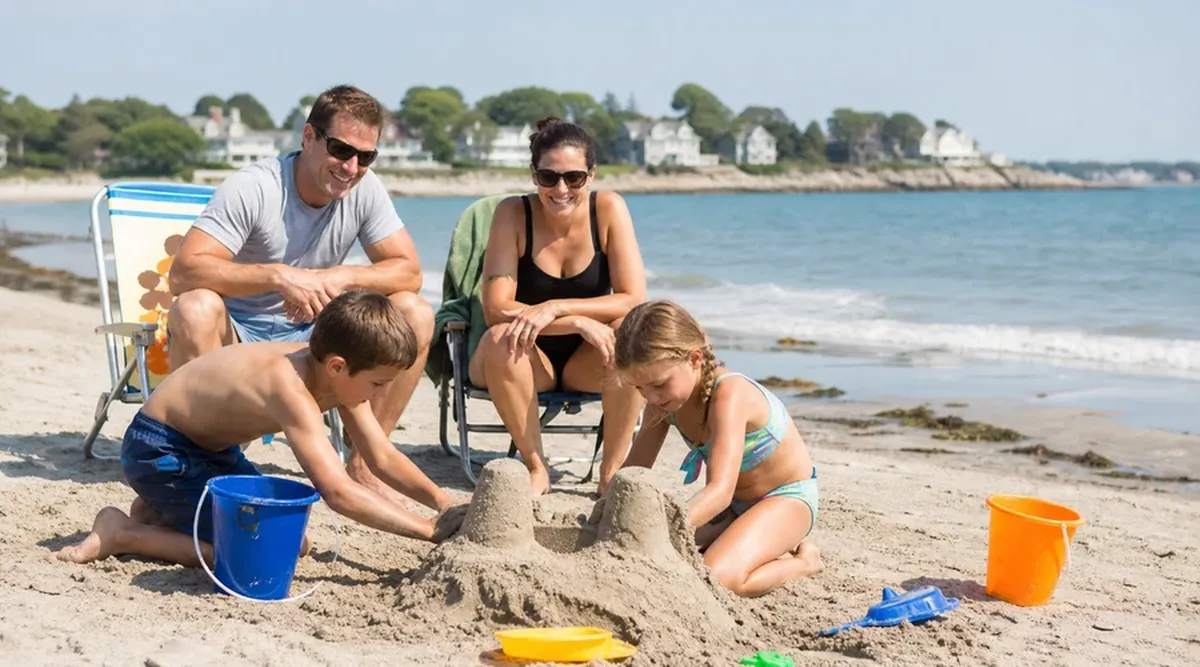
Building sand structures and learning about grain size differences between quartz and shell fragment beaches connects geology to play. Kite flying on windy Atlantic beaches requires awareness of nearby swimmers and power line distances inland. Frisbee and ball games belong in designated areas away from nesting bird buffers marked by symbolic fencing during spring and summer months on many seashores.
- Pack sun-protective rash guards reducing sunscreen reapplication frequency for children during extended beach hours.
- Establish meeting point landmarks visible to children old enough for limited independent exploration near lifeguard stands.
- Bring mesh bags for trash pickup gamified as stewardship activities supported by Leave No Trace junior materials.
- Check beach wheelchair and stroller access paths when mobility equipment affects family mobility on sand.
Aquariums, Nature Centers, and Indoor Alternatives
Coastal aquariums from Mystic Aquarium in Connecticut to Monterey Bay Aquarium in California and Texas State Aquarium in Corpus Christi offer climate-controlled educational blocks during heat, storms, or jellyfish bloom days closing swimming beaches. Touch tank etiquette—wet hands before contacting bat rays or horseshoe crabs, gentle two-finger touch only—appears on signage parents should preview with children before queue entry. Membership reciprocity programs through Association of Zoos and Aquariums networks may reduce repeat visit costs for multi-week coastal stays though verification of participating institutions remains necessary.
Nature centers operated by Audubon chapters, county parks departments, and national wildlife refuges along coasts provide shorter-duration activities including puppet shows, guided bird walks with loaner binoculars, and craft workshops using recycled materials. Scheduled program registration fills during school break weeks; online reservation systems publish capacity limits transparently on official pages rather than at-door assumptions.
- Review stroller policies in crowded aquarium galleries with narrow turn radius during peak attendance days.
- Identify quiet rooms or outdoor break areas for sensory-sensitive children needing decompression from exhibit stimulation.
- Combine aquarium visits with harbor walks comparing exhibited species information to working waterfront contexts visible outside.
Boat Tours and On-Water Family Experiences
Family-oriented harbor tours with enclosed seating, short duration under ninety minutes, and restroom availability suit younger children better than open-ocean wildlife expeditions with heavy swell. Life jacket sizing for infants and toddlers must meet Coast Guard type requirements; operators provide youth sizes but parents verify fit during boarding. Dolphin and whale watching with children requires realistic briefing that animals may not appear; preparing alternative narrative focus on vessel mechanics and navigation buoys prevents emotional disappointment misdirected at crew performance.
Calm-water kayak tours labeled beginner or family in mangrove estuaries of Florida or Elkhorn Slough in California introduce paddling with tandem seating options for adult-child pairs. Minimum age and weight rules reflect insurance underwriting rather than arbitrary exclusion; respecting them supports operator viability serving families safely. Stand-up paddleboarding generally suits older adolescents with swimming strength rather than preschool-age participants except as passengers on board extensions governed by operator-specific rules.
- Schedule on-water activities early in day before children fatigue from sand play and sun exposure.
- Carry motion sickness remedies only after consulting pediatric healthcare providers regarding age-appropriate options.
- Dress children in quick-dry clothing; cotton layers remain cold when splashed on breezy harbor tours.
Historical and Cultural Family Programming
Living history demonstrations at colonial coastal forts, whaling museum children's galleries, and lighthouse keeper cottage tours dramatize maritime pasts with costumed interpreters trained in age-appropriate dialogue. Fort Sumter boat access from Charleston, Castillo de San Marcos cannon firing schedules in St. Augustine, and San Francisco Maritime National Historical Park shipboard tours require advance ticket purchase during summer with stroller accessibility varying by historic vessel design constraints documented on NPS accessibility pages.
Indigenous coastal cultural centers including those affiliated with tribal nations in the Pacific Northwest and Alaska offer family programs when publicly scheduled; some events restrict photography or require registration reflecting cultural protocol distinct from commercial attraction norms. Educational families approach these programs as guests learning place-based history rather than consuming entertainment divorced from contemporary tribal sovereignty contexts explained in center introductory exhibits.
Physical Activity Balance and Rest Planning
Coastal family days easily over-schedule walking on soft sand, pier extensions, and boardwalk miles measuring longer than map estimates due to crowd weaving. Built-in rest at shaded picnic areas, library story hours in coastal towns during summer reading programs, and hotel pool time unrelated to ocean swimming provides recovery preventing evening meltdowns. Hydration reminders every thirty minutes during beach play reduce heat-related illness risks; children may not self-report thirst until dehydration symptoms appear.
Shoe selection matters on rocky shores and hot sand; water shoes protect against cuts and burns while old sneakers suffice for short cobble beach segments. Flip-flops fail on dune climbs and pier stairs; educational packing lists emphasize secure footwear over fashion preferences when safety statistics include foot lacerations from shell deposits.
- Map restroom locations at start of each coastal outing day when potty-training toddlers participate.
- Carry simple snacks avoiding meltable chocolate during hot car phases between activities.
- Define daily screen-time boundaries before trips to reduce conflict when indoor weather alternatives arise.
Multi-Generational and Accessibility Considerations
Grandparents joining coastal trips may prefer paved harbor paths and bench-equipped overlooks over strenuous dune climbs. Multi-generational success involves choosing activities with parallel options—museum interior seating while younger members tidepool briefly nearby—or splitting parties with rendezvous times rather than forcing uniform pace. Beach wagon carts assist gear transport but require firm sand slopes evaluation before loading elderly passengers against manufacturer warnings.
Autism-friendly programming appears at select aquariums and museums publishing sensory guide maps indicating loud gallery locations and quiet zones. Advance contact with visitor services departments requests social story PDFs some institutions provide describing sensory expectations through photographic sequences. Service animals follow ADA rules on public beaches and ferries; emotional support animal policies differ by operator and jurisdiction requiring verification before booking.
Budget and Logistics Without Commercial Pressure
Free family coastal activities include self-guided seashore walks, ranger-led beach talks advertised on park daily schedule boards, public pier fishing observation without license when not casting, and municipal splash pads in waterfront parks unrelated to ocean entry. Public library branches in coastal counties often host free marine science speakers during summer reading themes. Educational value does not correlate linearly with ticket price; planning balanced days mixing paid aquarium admission with free shoreline stewardship prevents budget fatigue while sustaining engagement.
Packing lists emphasizing reusable water bottles, broad-spectrum sunscreen, hats, and first-aid kits for minor scrapes reduce incidental purchases at tourist markup prices. Family coastal education succeeds when adults model curiosity—reading interpretive signs aloud, asking rangers questions, journaling sketches alongside children—rather than treating supervision as passive phone scrolling while youngsters play unsupervised near water edges requiring constant adult presence regardless of swimming ability claims.
- Download NPS app content for offline junior ranger booklet access when cell service fails on outer beaches.
- Establish family check-in rules before crowded boardwalk separation scenarios during holiday weekends.
- Review coast guard safe boating kid resources online before harbor days involving vessel boarding.
- Celebrate completed stewardship activities like trash collection with documented photos rather than material souvenir purchases.